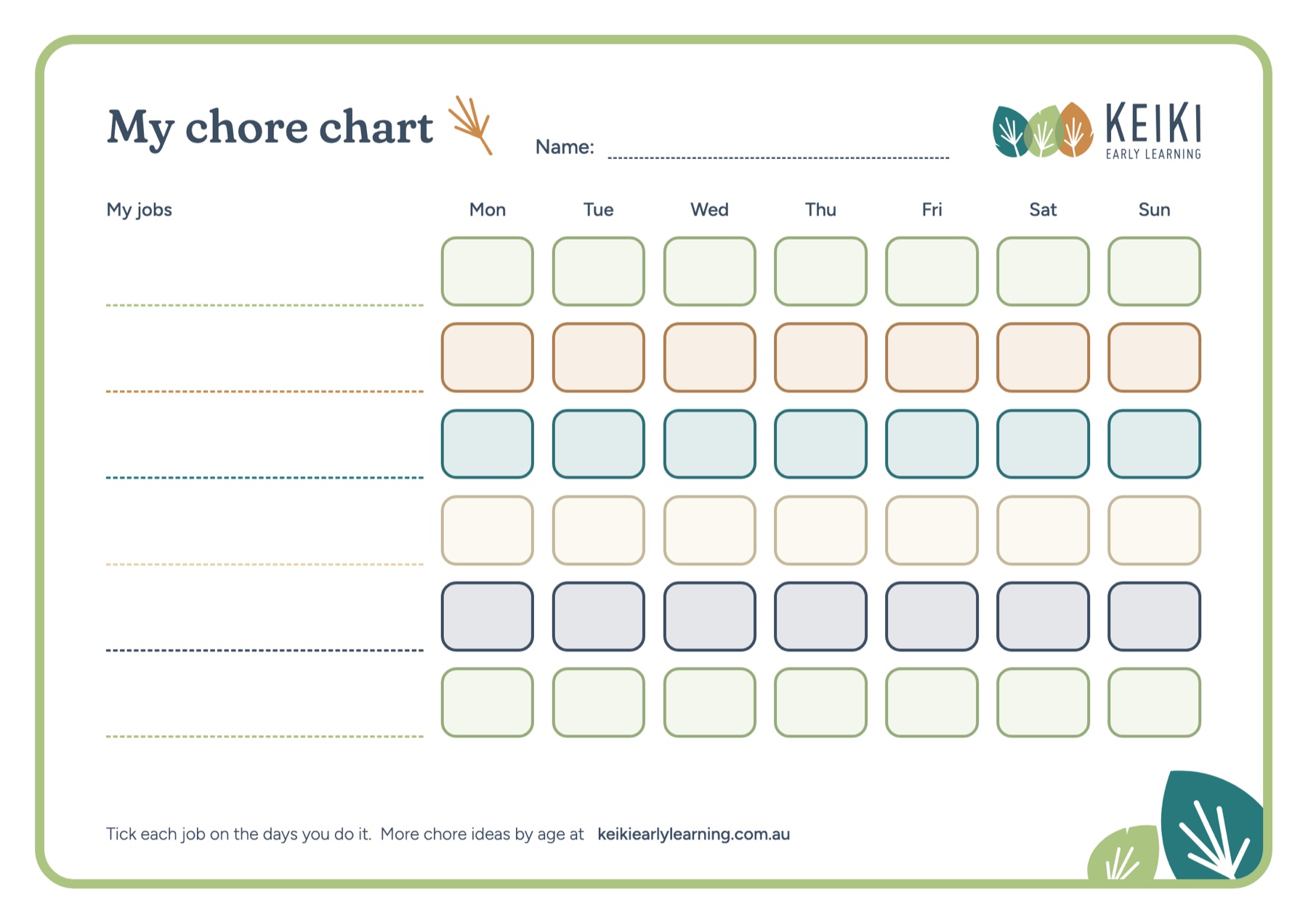
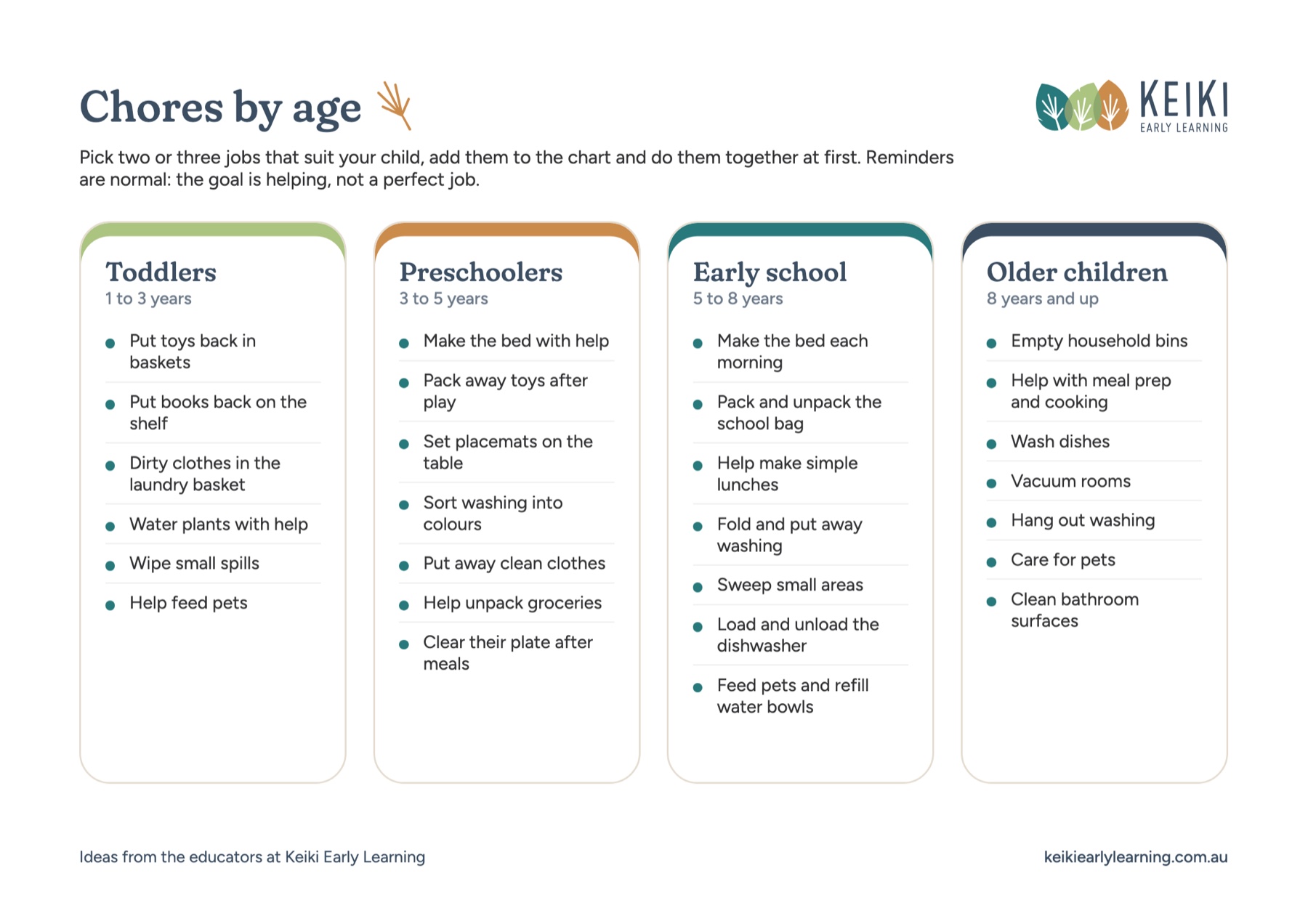
Download our free printable chore chart (2 pages: a weekly chart to fill in, plus chore ideas by age).

Building responsibility through everyday chores. As parents, we all want to help our children grow into capable, confident and caring people. One simple way to encourage these skills from an early age is by giving children age-appropriate chores around the house. Chores are much more than getting help around the house. They teach children responsibility,…
Building responsibility through everyday chores. As parents, we all want to help our children grow into capable, confident and caring people. One simple way to encourage these skills from an early age is by giving children age-appropriate chores around the house.
Chores are much more than getting help around the house. They teach children responsibility, independence, problem-solving and teamwork. When children contribute to family life, they learn that everyone plays an important role in helping a home run smoothly.
Download our free printable chore chart (2 pages: a weekly chart to fill in, plus chore ideas by age).
Age-appropriate chores help children:
The key is to choose tasks that match your child’s age and abilities, provide guidance when needed and celebrate their efforts.
Rather than offering rewards for every task completed, many child development experts encourage families to focus on the natural benefits of helping others. Children can learn the satisfaction of contributing, caring for their belongings and developing important life skills that will support them throughout their lives.
If you prefer to use a reward chart, create one that focuses on well-defined chores (for example, ‘pick up toys from the floor’ rather than ‘tidy room’) and try to use rewards that focus on spending time together, such as a family bike ride or a movie night.
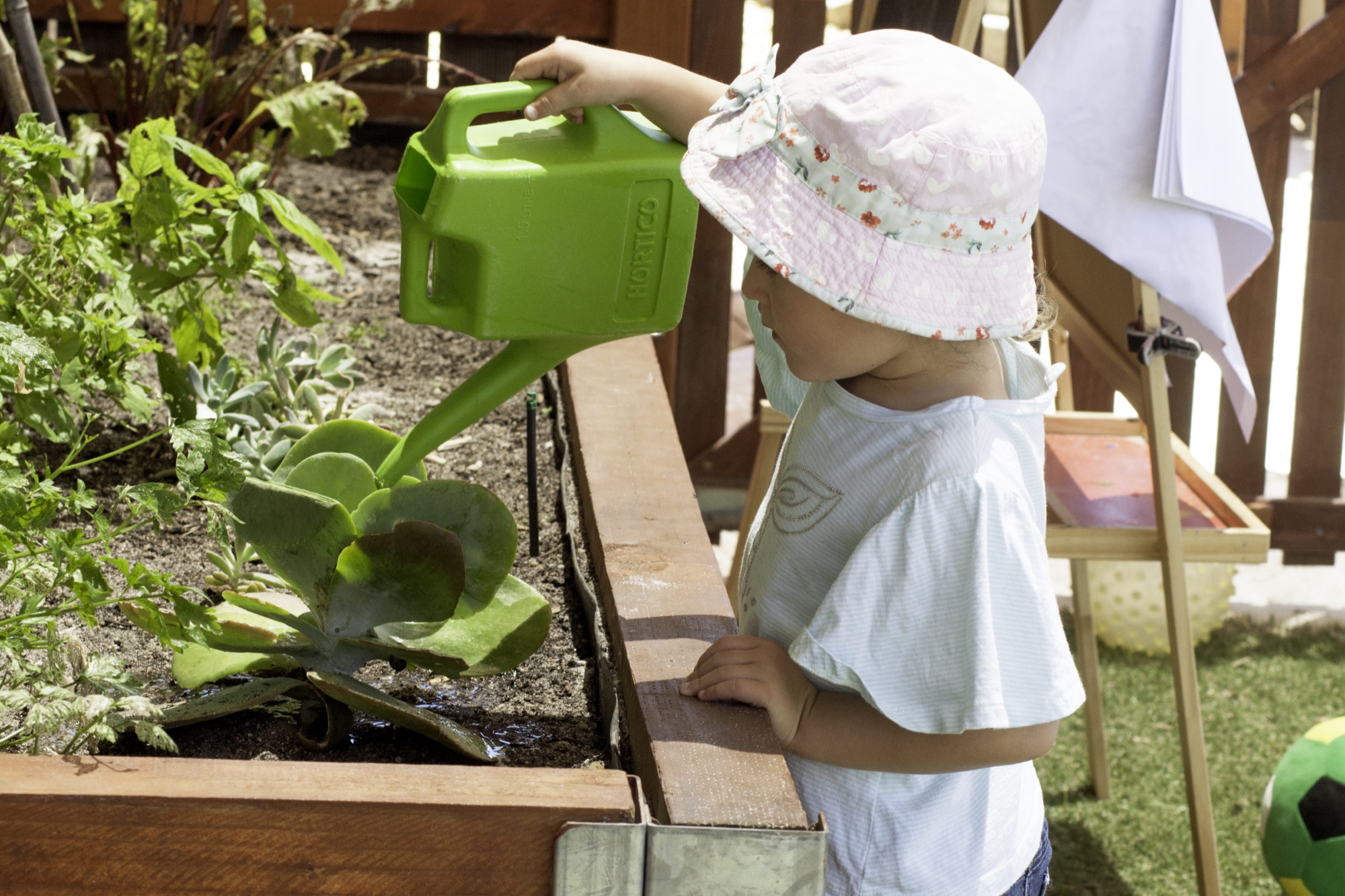
If you’re wondering what age children should start doing chores, even very young children from one year old can begin learning responsibility through simple daily tasks. At this age, chores should feel like a natural part of everyday routines and be completed alongside an adult when needed.
Toddlers can help with:
As children grow, they can take on a little more responsibility:
Remember, it is normal for young children to need reminders and support. The goal is not a perfectly completed chore but the opportunity to practise helping and contributing.
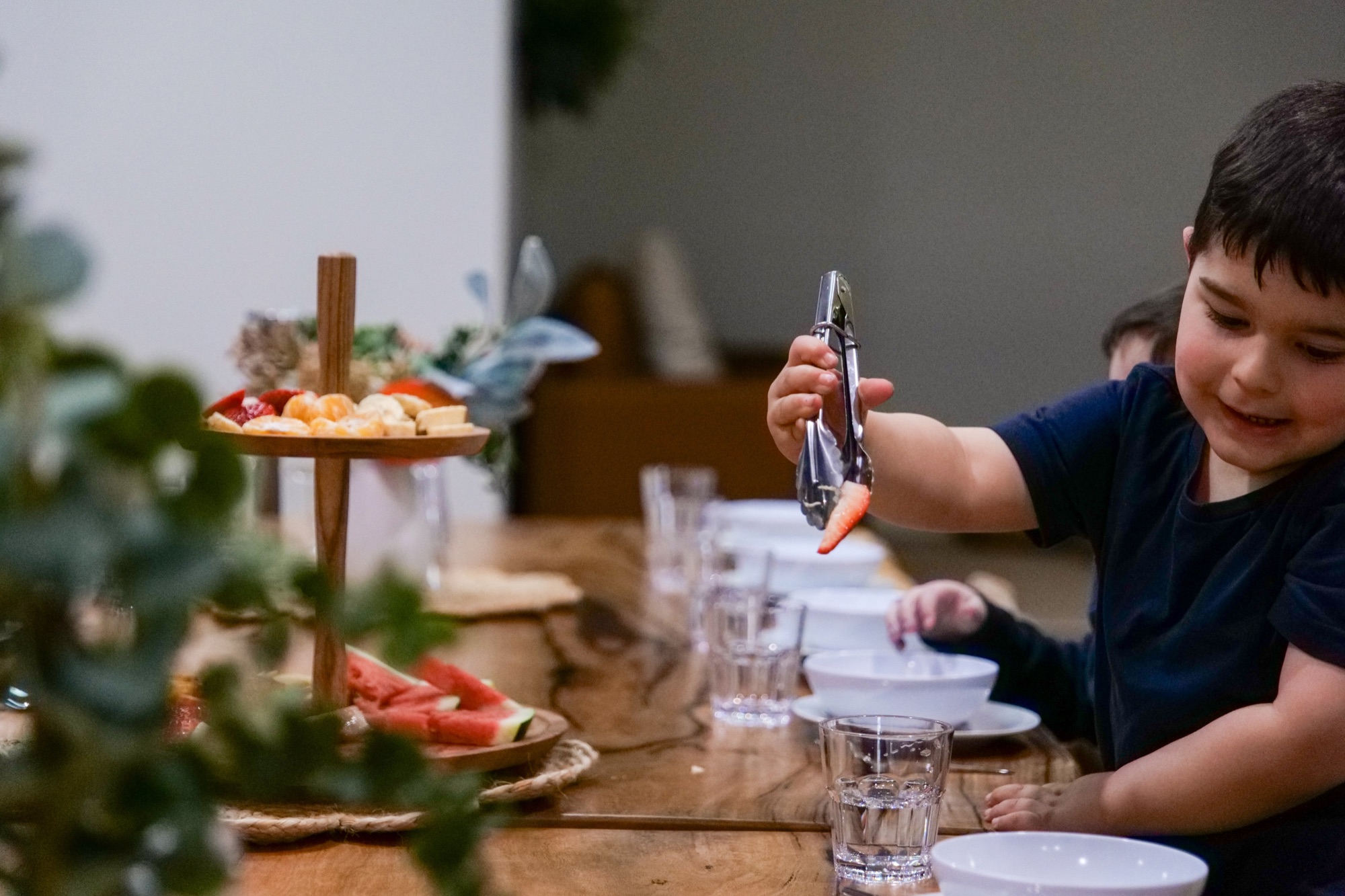
School-age children are often ready for more independence and can begin taking ownership of regular household tasks.
Children may be able to:
Older children can take on more responsibility, such as:
As children grow, involving them in regular household responsibilities helps them understand that being part of a family means helping one another.
Our chore chart has space for six jobs across the week, with a second page of chore ideas for each age group. Pick two or three jobs that suit your child, add them to the chart and stick it on the fridge.
Building responsibility works best when chores become a normal part of family life. Some simple ways to encourage your child to join in:
When children feel trusted and capable, they are more likely to develop pride in their responsibilities.
At Keiki Early Learning, children have many opportunities throughout the day to practise responsibility and independence in meaningful ways. This helps them build a sense of agency and autonomy.
Depending on their age and stage of development, children may:

These everyday experiences help children develop confidence, self-help skills and a sense of belonging, whether they are in our Toddlers room, Three Plus Kindy, our Preschool Program or Outside School Hours Care.
By encouraging children to contribute both at home and in childcare, we help them build valuable life skills that support independence, resilience and responsibility for years to come.
To find out more about our learning programs and daily routines, book a tour at your nearest Keiki Early Learning centre.