


Movable Feasts
How Flexible Mealtimes Work in Early Learning
Nourishing little bodies is a big part of every childcare day, but anyone who’s tried to wrangle a room full of toddlers to the table at exactly 12pm knows the challenge. Hungry children don’t run on a schedule, and deeply engrossed ones certainly don’t want to stop building their block tower just because the clock says so.
That’s where progressive mealtimes come in, and they’re becoming increasingly popular in early learning settings across Australia.
So, what are progressive mealtimes?
Rather than requiring all children to sit down and eat at the same time, progressive mealtimes give children a window, say 11:30am to 1:00pm, during which they can choose when to stop and eat. They might grab something from their lunchbox when their tummy rumbles, or join a few friends at the table when the mood strikes.
It’s not a free-for-all grazing situation. Educators keep a close eye to make sure every child eats, and gentle reminders go out as the window starts to close. It’s structured, but with breathing room built in.
Doesn’t routine matter for kids?
Absolutely, and this approach doesn’t throw routine out the window. The meal window itself provides structure. What changes is who decides when, within that window, a child sits down to eat.
At Keiki Early Learning, owner Samantha Morrell describes mealtimes as rituals rather than routines. Children choose how much to eat, self-serve where possible, and are encouraged to recognise their own hunger and fullness cues. Educators have two-hour gaps between meals so children can genuinely experience both states.
“By letting children choose when they eat, they are joining the table already positive and engaged in the mealtime ritual,” Samantha says.
The benefits go beyond the plate
Progressive mealtimes aren’t just about when children eat. They support a wider range of development:
- Independence and agency — children practise decision-making in a low-stakes, everyday context
- Social skills — smaller groups eating together naturally creates more conversation and connection
- Body awareness — learning to recognise hunger and fullness is a genuinely important life skill
- Reduced waste — children take what they’ll eat rather than being served a set amount
- A calmer environment — fewer children at the table at once means less noise and more relaxed mealtimes for everyone
Educators use mealtimes to model healthy, respectful relationships with food. Lunchtimes become social and relaxed occasions where children have time to eat, make choices for themselves, follow their own bodily cues and interact with their educators and peers.
What does it look like in practice?
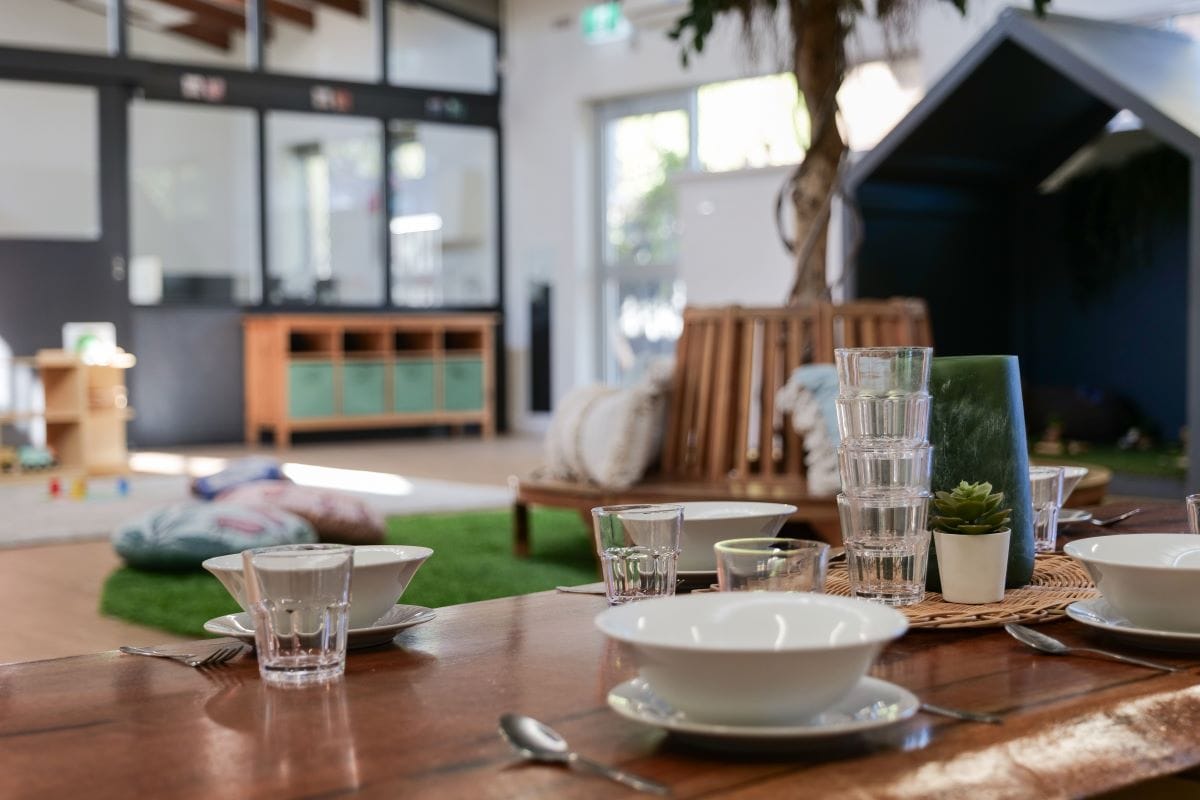
At Keiki, Educators invite children to eat their meals in small groups within a set window, allowing children to decide when they are ready to eat. Many services have allocated mealtime spaces such as dedicated dining rooms or central piazzas next to their kitchens. Children also often help set the table and clean up, which adds another layer of responsibility and ownership.
Mealtime rituals are the kind of everyday moment that quietly builds confidence and capability, which is really what good early learning is all about.
This article has been adapted from the original story published on KindiCare. Read the original here.